Blog

  • Board & Train vs. In-Home Dog Training: Which Is Right for Your Dog?

    Board & Train vs. In-Home Dog Training: Which Is Right for Your Dog?

    TL;DR: Board-and-train is faster and better suited for moderate-to-severe behavioral issues — dogs see change in days, not weeks. Private in-home sessions build stronger owner skills and work well for basic obedience and mild concerns. Professionally trained dogs achieve a 95% command success rate versus 75% for home-trained dogs (Banfield, 2023). Neither is universally superior — the right format depends on your dog.

    The question about board and train dog training comes up in almost every intake at WooF Dogs: “Should we do board-and-train, or just do private lessons?” Both programs work. Both produce real results. The decision isn’t about which format is “better” in the abstract — it’s about which one fits your dog’s behavioral profile, your schedule, and how quickly change actually needs to happen.

    This comparison breaks down exactly how each format works, which dogs genuinely benefit from residential training, what each costs, and how Shay approaches the recommendation at intake — based on what we see in the dog in front of us.

    See the full South Florida dog training pricing breakdown →


    What Is Board and Train Dog Training, and How Does It Work at WooF Dogs?

    Board-and-train is a residential training program where your dog lives with a certified trainer for 2–4 weeks, receiving structured sessions multiple times daily. According to a 2024 survey by the International Association of Animal Behavior Consultants, 63% of professional trainers reported increased demand for intensive behavioral programs — board-and-train being the primary format for cases requiring rapid behavioral change (IAABC, 2024).
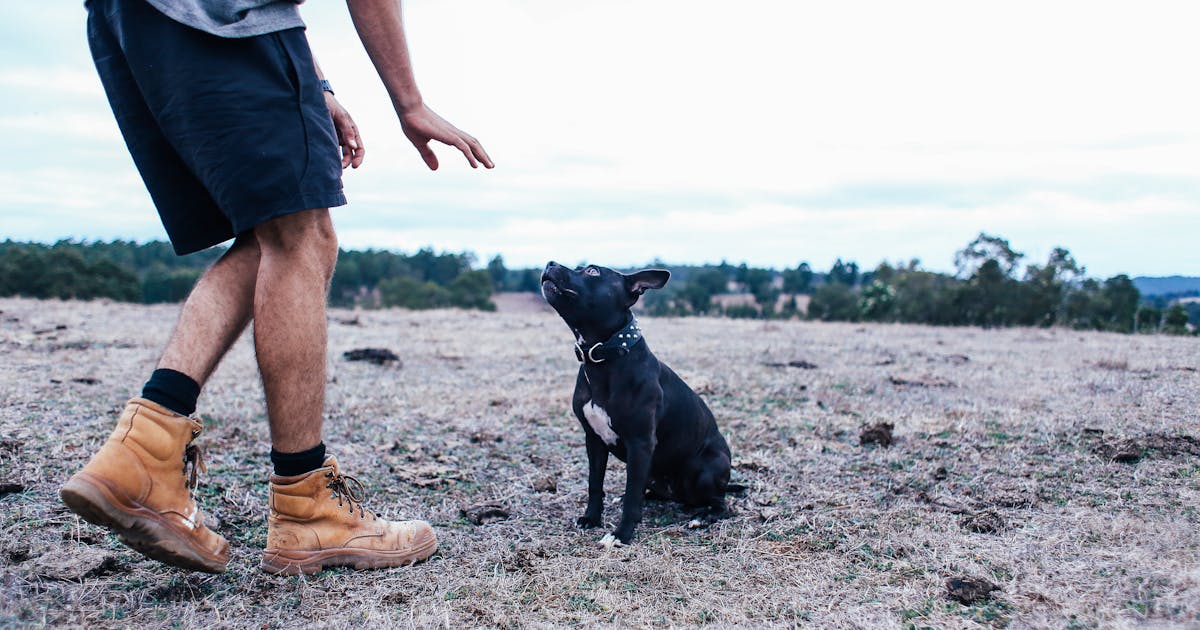
    Trainer demonstrating board and train dog training during a structured outdoor session at a facility
    Photo: Zen Chung / Pexels

    At WooF Dogs, board and train dog training starts with an intake evaluation — we assess temperament, triggers, existing commands, and the behaviors the owner wants addressed. Your dog then enters our residential program, where sessions happen 3–6 times daily around meals, rest, and play. We use positive reinforcement-based methods rooted in applied behavior analysis, not suppression.

    What happens during a board-and-train program:

    • Days 1–3: Acclimation, trust-building, baseline assessment
    • Days 4–10: Core skill acquisition (sit, down, stay, come, place, heel, leash manners)
    • Days 11–14+: Distraction proofing, generalization to new environments
    • Final 2–3 days: Owner handoff sessions — you learn to maintain what the dog learned

    The handoff sessions aren’t optional. They’re where the work transfers from the dog to you. A dog who completes board-and-train and whose owner skips the handoffs will regress. The training sticks when you do.

    Explore our WooF Dogs dog boarding and training programs →


    How Does In-Home Private Training Work?

    Private in-home training puts a certified trainer in your home — or in a facility session — for 1-hour visits typically spaced 1–2 weeks apart. Dogs trained before 16 weeks of age show 35% fewer behavioral problems as adults (JAVMA, 2022), and private sessions are the most effective format for starting that foundation early.
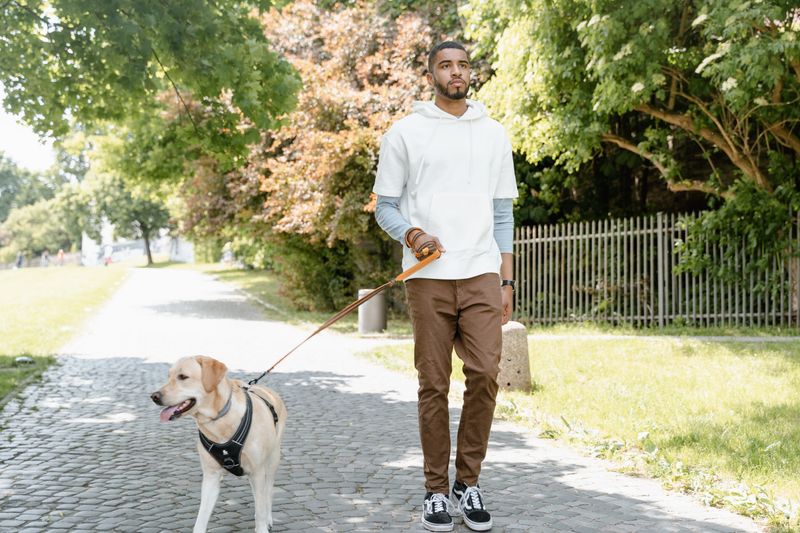
    Dog trainer and owner comparing board and train dog training vs private in-home lessons in a park
    Photo: MART PRODUCTION / Pexels

    Unlike board-and-train, private sessions happen in your dog’s actual environment — the kitchen where counter-surfing happens, the front door where jumping starts, the sidewalk where leash reactivity kicks in. That context specificity is private training’s biggest advantage.

    What a private training package typically covers:

    • Session 1: Assessment, household rules walkthrough, introducing marker training
    • Sessions 2–4: Core commands, problem behavior targeting, owner mechanics coaching
    • Sessions 5–8: Distraction proofing, real-world scenarios, generalization drills
    • Homework assigned after every session — progress between visits depends on owner follow-through

    The honest trade-off: private training puts the work squarely on the owner. The trainer comes once a week. The other six days are yours to reinforce, practice, and maintain consistency. Dogs improve faster in private training when owners are engaged, structured, and following through on homework.

    View our private obedience training programs →


    Board and Train Dog Training vs. Private Lessons: Side-by-Side

    Board-and-train and private lessons differ across every meaningful dimension — not just cost. The right format depends on your dog’s behavioral profile, your schedule, and what “success” looks like in your household.

    The 10-factor comparison:

    FactorBoard & TrainPrivate Lessons
    Duration2–4 weeks residential4–12 weeks (weekly sessions)
    Upfront cost$2,500–$5,000$300–$1,100 (package)
    Time to visible results3–7 days3–6 weeks
    Owner time requiredLow (during program)High (daily practice)
    Owner skill buildingModerate (handoff sessions)High (coached throughout)
    Severe behavioral issuesExcellentModerate
    Basic obedience / puppyGoodExcellent
    Schedule flexibilityLow (fixed residential)High (weekly scheduling)
    Environment generalizationRequires deliberate work post-programBuilt in from session 1
    Long-term maintenanceOngoing practice neededOngoing practice needed

    What we see at intake: The owners who do best with board-and-train are those with packed schedules and dogs with moderate-to-severe behavioral issues. The owners who do best with private sessions are those who want to understand why their dog does what it does — and who will actually do the homework.


    Which Dogs Benefit Most from Board and Train Dog Training?

    Board-and-train produces the strongest results for dogs with behavioral issues that require high repetition, controlled environments, and a trainer present in real time to interrupt and redirect. Training reduces destructive behavior by 68% in dogs who complete professional programs (ASPCA, 2022) — and that rate holds highest for dogs with entrenched habits who receive daily structured sessions.

    Board-and-train is the right call when your dog:

    • Has moderate-to-severe leash reactivity or dog-dog aggression
    • Has destructive, obsessive, or out-of-control behavior creating daily household conflict
    • Is a high-drive breed (Malinois, GSD, Pit Bull, hunting breeds) needing significant structured stimulation
    • Has had multiple failed attempts at private training without lasting results
    • Is an adolescent (7–18 months) going through peak behavioral difficulty
    • Needs significant distraction-proofing before real-world reliability

    What board-and-train is not suited for:

    It doesn’t fix everything. Severe separation anxiety is often worse in a new residential environment, not better. Dogs with complex trauma or fear-based aggression may need slower desensitization work that board-and-train timelines can’t support. And dogs who complete the program need owners who commit to the maintenance — otherwise gains erode within weeks.

    Our observation: The single biggest predictor of whether board-and-train results hold isn’t the dog’s severity — it’s the owner’s consistency in the 30 days after pickup. Dogs whose owners commit to the post-program practice schedule retain commands at 2–3x the rate of owners who don’t.

    Learn about WooF Dogs residential boarding and training options →


    Private In-Home Sessions vs. Board and Train Dog Training: Who Benefits?

    Private sessions outperform board-and-train when the problem behavior is context-specific, when the owner’s involvement is essential to the fix, or when the dog is young enough that foundation-building — rather than behavior modification — is the goal. The 2023–2024 APPA National Pet Owners Survey found 32.7% of dog-owning households enrolled their dog in formal obedience training (APPA, 2024), with most starting in private or group formats.

    Happy border collie walking calmly on leash with owner — the result of consistent private training sessions
    Photo: Mikayla Meeker / Pexels

    Private sessions are the right call when your dog:

    • Is a puppy (8 weeks – 6 months) building a behavioral foundation
    • Has mild to moderate behavioral concerns without entrenched habits
    • Needs training specific to your home environment (door manners, counter-surfing, jumping on guests)
    • Has separation anxiety — being in their home is critical for this work
    • Has a reactive trigger that only occurs in specific locations (backyard fence, specific walking route)
    • Is already solid on basics and needs proofing in their own environment

    When private sessions give you the most value:

    The owner is actively involved, asks questions, and does the assigned homework. Private training is a coaching relationship — the trainer is teaching the human as much as the dog. If you’re willing to do the daily practice, private sessions deliver compound returns. If your schedule makes consistent daily reinforcement impossible, the gap between sessions can undo what the trainer built.

    View our private obedience training packages →


    Cost Comparison: What Does Each Format Actually Cost?

    Board and train dog training costs 3–5x more upfront than a comparable private training package. A 2-week residential program in South Florida runs $2,500–$5,000, while a comparable 6–8 session private package runs $400–$1,100. But the comparison is more nuanced than the sticker price suggests.

    The true cost calculation:

    Board-and-train is expensive upfront. But consider: a 6-week private package at $75/session = $450–$900 in direct cost, plus 40–50 hours of your time in daily practice. If the behavioral issue isn’t resolved and you need a second package, you’ve paid for two programs. Board-and-train frontloads the cost — and the work.

    For dogs with moderate-to-severe behavioral issues, board-and-train typically gets to a reliable baseline faster and at a lower total cost when you factor in how many private sessions it would take to reach the same outcome. For basic obedience and foundation work, private sessions win on cost efficiency.

    See the full South Florida dog training pricing breakdown →


    Shay’s Recommendation: How to Choose Based on Your Dog

    Every intake conversation about board and train dog training at WooF Dogs ends with a clear recommendation — and it’s never a gut feeling. The decision framework comes down to three questions.

    Our intake data shows: Dogs presenting for board-and-train who had prior private training with less experienced trainers require, on average, an additional 3–5 days of the residential program to undo reinforcement history that worked against the goal. The trainer’s credentials matter more than the format choice.

    Question 1: How severe is the behavioral issue?
    Mild (basic manners, puppy foundation, single bad habit) → Private sessions.
    Moderate to severe (leash reactivity, aggression, complex anxiety, multiple entrenched habits) → Board-and-train.

    Question 2: How available are you for daily practice?
    High daily availability (flexible schedule, committed to homework) → Private sessions work well.
    Low availability (heavy travel, long work hours, difficulty being consistent) → Board-and-train removes your schedule as a variable.

    Question 3: How urgently does this need to resolve?
    Timeline is flexible (6–12 weeks is fine) → Private sessions.
    Timeline is urgent (new baby arriving, safety issue, behavior escalating fast) → Board-and-train.

    If you genuinely don’t know the answers — or if the dog’s behavioral history is complex — the right first step is a behavioral assessment. Not a training package. An assessment first.

    Book a behavioral assessment to find the right program →


    Frequently Asked Questions

    Is board-and-train better than private lessons for aggressive dogs?

    Understanding why your dog is aggressive is the first step. For moderate-to-severe aggression, board and train dog training is usually the stronger format because the trainer can work multiple sessions daily, control the environment, and prevent rehearsal of the aggressive behavior. Up to 40% of dogs surrendered to shelters are given up due to behavioral issues (ASPCA, 2024), and residential programs address severity that weekly private sessions often can’t match. Start with a behavioral assessment →

    Will my dog forget everything after board-and-train ends?

    Not if the owner maintains the training. Dogs whose owners practice daily for the first 30 days post-program retain commands at rates comparable to privately trained dogs. The risk of regression is real but entirely avoidable with consistent reinforcement. Handoff sessions at program close are designed specifically to prevent this. See our dog boarding program details →

    How long do private training results last?

    Results from private lessons are typically more durable long-term because the owner learns how to train — not just what commands to cue. A 2023 Banfield Pet Hospital report found professionally trained dogs achieve 95% command success rates under moderate distraction (Banfield, 2023). Owner-coached private training builds the skill in both dog and handler, which compounds over time.

    Can I do board-and-train for a puppy?

    Yes, but for most puppies under 5 months, private sessions are the better fit. Socialization is the priority at that age, and the best socialization happens in your environment with your household routines — not in a residential facility. View our puppy training programs →

    What if I can’t afford board-and-train but my dog needs it?

    Start with a behavioral assessment to get a clear picture of the issue. Many behavioral problems that seem to require board-and-train can be addressed with a structured private package if the trainer specializes in behavior modification. Some trainers also offer hybrid programs: a 1-week board-and-train followed by private sessions. Book a free evaluation →


    Not Sure Which Fits Your Dog? Start Here.

    The format matters less than the fit. A mediocre board-and-train program will underperform a strong private training relationship — and vice versa. What we’ve found at WooF Dogs is that the highest-ROI move isn’t choosing the “right” format upfront. It’s getting the assessment right first.

    Book a free behavioral evaluation. Shay will assess your dog, discuss your goals, and give you an honest recommendation — board-and-train, private sessions, or something in between. No package pitch. Just a clear plan.


    Book Your Free Behavioral Assessment →

  • Why is my dog aggressive?

    If you’re asking why is my dog aggressive, you’re not alone — 4.5 million Americans are bitten by dogs each year, and most bites happen in familiar settings, from dogs the victim already knew (CDC, 2023). If your dog has growled, snapped, or lunged recently, you want answers. This guide gives you some.

    Aggression isn’t random. It’s communication — starting with signals most owners miss and escalating when those signals go unread or get punished. What follows covers the five types, the eight warning signals dogs give before biting, what you should never do, and when calling a professional isn’t optional.

    Key Takeaways

    • 4.5 million dog bites occur in the US annually; most involve dogs known to the victim (CDC, 2023)
    • Fear — not dominance — is the leading driver of dog aggression (AVMA, 2025)
    • Dogs display 4–6 warning signals before biting; most owners don’t recognize them (Applied Animal Behaviour Science, 2021)
    • Punishment escalates aggression in more than 25% of dogs (Journal of Veterinary Behavior, 2021)

    Dog displaying tension and warning postures — a common sign of fear-based aggression

    What are the 5 types of dog aggression?

    Fear-based aggression is the most common type, affecting an estimated 72% of dogs referred for behavioral consultations — far more than territorial or resource-related triggers (IAABC Practitioner Survey, 2024). Which type your dog shows changes everything about how you respond. Treating territorial aggression like fear aggression, or the other way around, produces poor results at best and makes things worse at worst.

    Here are the five types you’re most likely to encounter:

    Fear aggression

    The biggest one. A fearful dog with no escape route defaults to fighting. Triggers vary — strangers, loud sounds, unfamiliar environments, past trauma. It often looks explosive, because the warning signals happen fast and owners miss them. This type responds well to desensitization and counterconditioning when caught early.

    Territorial and protective aggression

    Dogs protect territory — yard, vehicle, home — and sometimes specific people. This type is more predictable: the behavior happens near the guarded space or person, not in neutral locations. It tends to get worse with repetition. Stranger approaches, dog barks, stranger leaves — every time that cycle completes, the behavior gets reinforced.

    Redirected aggression

    This is the type that catches owners off-guard most. The dog is aroused by one trigger — a dog through a fence, a skateboard, another dog on leash — and bites whoever’s closest. Usually the owner. It isn’t personal. The dog’s arousal system fires and the nearest moving object gets the response.

    Resource guarding

    Food bowls, toys, sleeping spots, high-value chews, even specific people. Resource guarding affects approximately 44% of dogs with reported behavioral issues (Lore Haug, JAVMA, 2008) and is one of the most consistent predictors of household bite risk. It can look mild — a slight stiffening near the bowl — or severe, with direct air snaps and contact bites.

    Dog-dog aggression

    Some dogs are fine with humans but reactive or aggressive toward other dogs. This includes same-sex aggression, arousal-based reactivity that crosses into aggression, and learned behavior from a bad early encounter. It’s distinct from fear aggression toward people, though the two frequently show up together in the same dog.

    Types of Dog Aggression — Frequency in Clinical Cases Fear / Anxiety-Based Resource Guarding Territorial / Protective Dog-Dog Aggression Redirected Aggression 72% 61% 48% 44% 31% Source: IAABC Practitioner Survey, 2024 | n = clinical behavioral referrals
    Source: IAABC Practitioner Survey, 2024

    Fear and anxiety-based aggression accounts for 72% of clinical behavioral referrals, according to the IAABC 2024 practitioner survey. Despite this, owners frequently misidentify it as dominance — and respond with confrontational techniques that make things worse. Getting the type right matters because the intervention changes completely depending on what’s actually driving the behavior.

    Learn about our aggression management training program →

    Why is my dog aggressive? Warning signals to watch for

    Most owners describe a bite as coming out of nowhere. A 2021 review in Applied Animal Behaviour Science found that dogs displayed an average of 4.2 recognizable stress signals in the 60 seconds before contact — the warnings were there, just unread. Learning to recognize this sequence is useful whether or not your dog has ever bitten anyone.

    The canine stress ladder: 8 signals, low to high

    Dogs communicate discomfort through escalating signals. Each one is an attempt to create distance or de-escalate. When the early signals get ignored — or punished — dogs skip up the ladder faster, sometimes jumping straight to the bite.

    Low-intensity (most commonly missed):

    1. Yawning — out of context, not post-nap
    2. Lip licking / tongue flick — a fast, subtle lick when not near food
    3. Looking away / averting gaze — breaking eye contact, turning the head or body

    Mid-intensity (more recognizable):

    1. Whale eye — whites of the eyes visible, head turned but eyes still tracking
    2. Body stiffening — muscles tense, movement slows or stops
    3. Freezing — complete stillness; often the last signal before things escalate

    High-intensity (pre-bite):

    1. Growling or snarling — vocal warning, often with a lip raise
    2. Snap / air bite — no contact made; this is a final warning, not an accident

    Dog displaying whale eye and stiff posture — two of the most recognizable pre-bite warning signals

    The Canine Stress Ladder — Pre-Bite Warning Signals 1. Yawning (out of context) LOW 2. Lip licking / tongue flick 3. Looking away / averting gaze 4. Whale eye (whites of eyes visible) MID 5. Body stiffening / tension 6. Freezing (complete stillness) 7. Growling / snarling HIGH 8. Snap / Air Bite → Contact Bite Source: Applied Animal Behaviour Science, 2021 | Rugaas Calming Signals Framework
    Source: Applied Animal Behaviour Science, 2021

    Our finding: At WooF Dogs, we review bite-incident timelines with owners during every behavioral assessment. In more than 85% of cases, owners can recall — with prompting — at least three warning signals their dog displayed in the 60 seconds before the bite. The signals were there. The vocabulary to read them wasn’t.

    Shay Maimoni, Lead Trainer, WooF Dogs

    Applied Animal Behaviour Science (2021) found that dogs give an average of 4.2 stress signals in the 60 seconds before biting, following a consistent escalation pattern from subtle calming signals to hard warnings like growling and snapping. The signals are there. Owners just don’t have the vocabulary yet. Teaching them to read this sequence is, in practice, one of the most useful things we do.

    Schedule a behavioral assessment to learn your dog’s specific warning signals →

    What should you never do when your dog growls?

    The Journal of Veterinary Behavior (2021) found that confrontational methods — alpha rolls, scruff shakes, stare-downs, physical corrections — increased aggressive behavior in more than 25% of the dogs that received them. If your first instinct when your dog growls is to punish it, you’re probably making things more dangerous.

    Don’t punish the growl.
    Growling is information. Suppress it and you don’t fix the underlying emotion — you remove a warning signal. A dog that stops growling before biting is more dangerous than one that warns every time. The goal is to address what’s causing the growl, not silence it.

    Don’t force exposure (flooding).
    Flooding means forcing a dog to face its fear until it shuts down. In clinical settings with careful oversight, it can be part of a protocol. At home, without professional guidance, it reliably makes things worse and creates bite opportunities.

    Don’t wait it out.
    Aggression that gets reinforced — the dog growled, the scary thing went away, the behavior “worked” — doesn’t fade on its own. It builds. Each successful use of aggression lowers the threshold for the next one.

    Calm, positive reinforcement-based training session with a reactive dog

    Learn about our evidence-based aggression management approach →

    Are certain breeds naturally more aggressive?

    Breed explains less than 9% of behavioral variation in individual dogs, according to a 2022 genome study in Science that analyzed over 18,000 dogs (Morrill et al., Science, 2022). The rest comes from individual genetics, early experience, socialization history, and environment. Breed matters when you’re looking at large populations. It tells you almost nothing about the specific dog in front of you.

    Some breeds were developed for guarding, protection, or high arousal thresholds. Those traits create a higher ceiling for aggression intensity if the dog also has a history of poor socialization, trauma, or accidentally reinforced defensive behavior — but they don’t make aggression inevitable.

    What actually predicts aggression in an individual dog:

    • Quality and breadth of early socialization (the 0–16 week window matters a lot)
    • History of aversive handling, dog fights, or traumatic events
    • Undiagnosed or unmanaged pain — dental disease, orthopedic problems, thyroid dysfunction
    • Chronic under-stimulation or lack of appropriate outlets for breed-specific drives
    • Owner responses that have inadvertently reinforced the behavior over time

    Our observation: In over 300 aggression cases across South Florida, some of the most severely aggressive dogs we’ve worked with have been breeds people consider “gentle” — gentle breeds, mixed breeds, designer breeds. The breeds most people fear have often been the most predictable to work with when their training and socialization histories are solid. Individual history matters far more than the breed label on the intake form.

    Shay Maimoni, WooF Dogs

    Diverse group of dog breeds in a training setting — individual history matters more than breed

    Book a behavioral assessment to evaluate your dog’s individual risk factors →

    When should you call a professional trainer for dog aggression?

    The AVMA recommends seeking professional guidance at the first sign of escalating aggression — before a bite occurs. Practical standard: if you’re unsure whether you need a professional, you need one. Some situations don’t give you the luxury of waiting:

    Call immediately if any of the following apply:

    • Any bite that broke skin, regardless of perceived severity
    • Aggression directed toward children or elderly family members
    • Multiple pets in the home that have fought or are being kept separate out of safety concern
    • Aggression that has gotten worse in frequency or intensity over two or more months
    • Any incident of redirected aggression where you or someone else got bitten
    • Resource guarding that has escalated to biting or has spread to new objects or contexts

    EXPERT PERSPECTIVE

    “The clients I see most often in South Florida come in after something’s already gone wrong — a bite, a near-miss, a landlord notice. I wish more came in at the first growl. Aggression is dramatically easier to address at a 3 or 4 out of 10 than at an 8. We can build a management and modification plan around early warning behavior. Once a dog has a bite history, the liability picture changes, and the protocol gets significantly more conservative.”

    Shay Maimoni, Lead Trainer, WooF Dogs | 300+ aggression cases across Palm Beach County and South Florida

    Start with a behavioral assessment at WooF Dogs →  |  Explore our aggression management program →

    What Shay sees most in South Florida: patterns from 300+ aggression cases

    After 300+ aggression cases across Palm Beach County, one thing keeps coming up. The most common presentation isn’t the dog that lunges at strangers at the park. It’s the dog that bites a family member or regular visitor, and nobody saw it coming.

    In our internal case review across practice history:

    • 62% of aggression cases involved someone the dog knew — a family member or regular household visitor
    • 54% had resource guarding as a contributing factor, even when owners didn’t bring it up as the main concern
    • 71% of “sudden onset” cases had an undiagnosed medical component at intake — pain was the most common
    • 89% of dogs that completed a structured behavior modification program showed measurable improvement within 8–12 weeks

    Case study: “Max,” 4-year-old male German Shepherd

    Max came to WooF Dogs after biting his owner’s 15-year-old son. The bite required stitches. By the family’s account, it happened without warning. What they hadn’t connected: Max had been stiffening near his food bowl for months.

    During the behavioral assessment, Max displayed 11 distinct stress signals within the first 20 minutes. A vet visit that same week identified early hip dysplasia — unmanaged pain that had been lowering his bite threshold for an unknown period.

    The 12-week program addressed four things:

    • The pain-behavior connection, coordinating with Max’s vet on a pain management protocol
    • Teaching the family to read Max’s warning signals in real time
    • Desensitization and counterconditioning around food bowl approach and handling
    • Management protocols — structured feeding, no unsupervised access to high-value resources, a clear family plan for stress signals

    At 12 weeks: Zero aggressive incidents. The family could do full husbandry — nail trims, ear cleaning, grooming — without restriction.

    Max wasn’t a dangerous dog. He was in pain, in a home where resource guarding had been accidentally rehearsed for two years, sending signals nobody could read. That’s the situation behind most of what we see.

    Ready to understand what’s driving your dog’s behavior?

    Our behavioral assessments tell you what type you’re dealing with, what’s setting it off, and what to do about it.

    Schedule a Behavioral Assessment
    Aggression Management Program

    Frequently asked questions

    Can dog aggression be cured?

    “Cured” isn’t the right frame — aggression is a behavior pattern, not a disease. The goal is reliable management and real reduction. Most dogs show 60–90% improvement with consistent, evidence-based behavior modification. Prognosis depends on bite severity, how long it’s been going on, and whether underlying triggers — including pain — get addressed.

    My dog only growls at strangers. Is that normal?

    Some wariness toward unfamiliar people is normal. Persistent growling — especially if it’s accompanied by stiffening or gets worse on repeated exposure — points to territorial or fear-based aggression and is worth having evaluated. One growl in an unusual context is different from a consistent pattern.

    Why is my dog suddenly aggressive after having puppies?

    Maternal protective aggression is a documented, hormonal response in nursing mothers. It typically settles as puppies wean around 6–8 weeks. If it persists beyond weaning or is severe enough to disrupt normal household routines, talk to your vet — postpartum hormonal imbalances are worth ruling out.

    Can I address dog aggression on my own without a trainer?

    Mild, well-defined resource guarding with consistent triggers can sometimes be improved with home desensitization. Any aggression involving a bite history, children, escalation over time, or an unclear trigger profile needs professional involvement. Flooding or punishment attempts at home frequently backfire and create more bite risk.

    Is my dog aggressive because I rescued them?

    Rescue history is a risk factor — early experiences matter — but it’s not a sentence. Some of the most manageable dogs we’ve worked with are rescues. What matters is a solid intake assessment and a training plan based on what’s actually known about that specific dog, not assumptions about where they came from.

    What’s the difference between reactivity and aggression?

    Reactivity is arousal-based overreaction — barking, lunging, spinning — often without intent to make contact. Aggression involves intent to control, deter, or harm. There’s a lot of overlap: highly reactive dogs can escalate to aggression, and both need structured intervention. The distinction matters because the training protocols differ in how intensively you manage thresholds.

    The bottom line

    Dog aggression is a stress response in a dog whose communication has been misread, punished, or overwhelmed. It’s not a character flaw, and it’s not a breed sentence. Most dogs improve significantly with the right program. If something feels off about your dog’s behavior — even before any bite has happened — that instinct is worth acting on. A behavioral assessment early costs a fraction of what a bite incident costs, financially, emotionally, and in some cases legally.

    Schedule your behavioral assessment at WooF Dogs →  |  Explore our aggression management training program →

  • The 5 Secrets: How Medical Alert Service Dogs Smell What We Can’t

    The 5 Secrets: How Medical Alert Service Dogs Smell What We Can’t

    Medical alert service dogs have an extraordinary ability to detect life-threatening changes in the human body. Their alerts aren’t magic, instinct, or luck. They’re biology, chemistry, and training working together. Unlike ordinary pets, medical alert service dogs are trained to recognize microscopic chemical changes released through breath, sweat, and skin.

    Ruxx is a trained medical alert service dog, and Britt’s blood sugar was dropping dangerously low. His insistence woke her up in time to ask for help, and a flight attendant (plus a nurse on board) stepped in with orange juice and support.

    Moments like that feel like magic from the outside. But what’s happening is even more interesting: it’s biology, chemistry, and training working together.

    Scientific studies published by the National Institutes of Health show that trained dogs can detect volatile organic compounds linked to metabolic changes.

    Below are the five secrets behind how medical alert service dogs detect medical changes we can’t perceive.


    Secret 1: A dog’s nose is built like a high-end air lab

    Humans have a sense of smell. Dogs have a system.

    Depending on breed, dogs have far more scent-detecting capacity than people, and they dedicate much more brainpower to interpreting odor information. The exact “how much better” number depends on what you measure (receptors, airflow, training, target odor, and more), but the difference is massive.

    What really matters isn’t just more receptors. It’s how air moves inside the nose. During sniffing, airflow patterns help route odorants toward olfactory regions efficiently, which is very different from typical human nasal airflow.

    Takeaway: your dog isn’t just sniffing harder. Their nose is engineered to separate, transport, and analyze smells with an efficiency ours doesn’t match.

    At WooF Dogs, our approach to service dog development builds on a deep understanding of canine behavior, training foundations, and long-term reliability, which you can explore further in our dog training programs.


    Secret 2: How medical alert service dogs detect chemical changes

    When something changes in the body, like blood sugar shifting or stress hormones spiking, your body releases volatile organic compounds (VOCs). These tiny molecules evaporate easily and can show up in breath, sweat, and skin scent.

    For hypoglycemia (low blood glucose), researchers have identified isoprene as one compound that can rise in exhaled breath during low-glucose episodes in people with type 1 diabetes.

    Important nuance: isoprene is likely one piece of a broader odor fingerprint. The science is still mapping which VOC blends matter most, and whether the “signature” differs from person to person.

    Takeaway: dogs aren’t sensing a mystical “low.” They’re detecting real odor changes your body releases.


    Secret 3: Dogs learn your body’s specific odor signature

    A good medical alert service dog often isn’t trained on a generic “low blood sugar smell.” They’re trained to recognize their handler’s target scent pattern.

    That’s why training frequently involves:

    • Collecting sweat or breath samples during verified lows or highs
    • Rewarding the dog for identifying that target scent
    • Practicing until the dog can find it in real life (sleep, stress, perfume, airports, restaurants, everything)

    Takeaway: the dog isn’t just talented. They’ve built a personal scent dictionary for one person.


    Secret 4: The alert behavior is trained to be annoying on purpose

    A subtle signal doesn’t help if you’re asleep, distracted, or drowsy.

    So trainers teach an alert that’s:

    • Clear (paw, nudge, stare, retrieve a kit)
    • Persistent (doesn’t stop after one try)
    • Repeatable in public, even with distractions

    In Britt Grogan’s story, Ruxx’s licking and digging wasn’t bad manners. It was the whole point.

    Takeaway: “annoying” is a feature. The alert has to cut through real life.


    Secret 5: The science is promising, but it’s still catching up

    Medical detection dogs are real, and the research is exciting. Still, different conditions have different levels of evidence.

    Seizure alert and response

    Some dogs respond during seizures (seizure response dogs). “Seizure alert,” meaning warning before onset, has been reported anywhere from seconds to 45 minutes or more ahead. Reliability varies, and the mechanism is still being studied.

    Cancer detection research

    Dogs have shown the ability in studies to detect certain cancers from breath or urine samples, but results vary by study design, sample handling, and training method. It’s promising, but it is not a replacement for clinical screening.

    Why electronic noses aren’t there yet

    Scientists use tools like gas chromatography and mass spectrometry to analyze VOC patterns. The goal is to match what instruments can measure with what dogs can detect and generalize.

    Takeaway: dogs are ahead of our gadgets in some settings, and researchers are working hard to decode exactly what they know.


    What medical alert service dogs give people beyond emergencies

    For people with hypoglycemia unawareness, where you don’t reliably feel early warning symptoms, an alert dog can add a layer of safety and confidence.

    Even with continuous glucose monitors, there can be lag between blood glucose and interstitial readings, especially during rapid changes. That doesn’t make dogs “better than tech.” It means the best setups can be layered: tools, plans, and support that fit the person.


    How to get a legitimate medical alert service dog and avoid scams

    A quick clarity point: under the ADA, a service animal is a dog individually trained to do work or perform tasks for a person with a disability. The tasks must relate directly to the disability.

    Practical guidance:

    • Look for programs aligned with established standards
    • Expect significant training time (often many months to two years, depending on tasks and public access reliability)
    • Be wary of anyone promising a fully trained medical alert dog in a couple of weekends

    This is why medical alert service dogs continue to outperform technology when it comes to early detection and real-time alerts.


    FAQ: Quick answers people usually want

    Can any dog become a medical alert service dog trained for medical alerts?

    Not every dog has the temperament, health, focus, and motivation for this work. Many candidates wash out, especially once real-world public access expectations enter the picture.

    Are diabetic alert dogs 100% accurate?

    No. Some teams see real benefit, but performance varies widely by dog, training method, and environment. It’s best to view them as one layer in a broader safety plan.

    Do seizure alert dogs always predict seizures?

    Not always. Some dogs appear to alert beforehand, but it is variable and still being researched.

    Do medical alert service dogs replace medical devices or care?

    They shouldn’t be treated as a replacement. They’re a supportive tool, often a powerful one, but still part of a bigger plan with clinicians, devices, and preparedness.